

MENU

REGULATORY REQUIREMENTS &
INDUSTRIAL ENVIRONMENTS
Design of technical shelters and industrial structures adapted to the regulatory, climatic, safety and operational constraints of sensitive infrastructure.
IPM-MONDIA develops technical solutions that incorporate the key regulatory and environmental constraints encountered in the industrial, energy, offshore and critical infrastructure sectors.
Our solutions can incorporate specific requirements relating to:
🧱 Fire resistance EI30 to EI120
🔥 Euroclass fire reaction / M classification
⚠️ ATEX / SEVESO environments
🌦️ Climatic constraints
💥 Blast-proof protection
📡 EMC requirements
🌍 Seismic constraints
🌊 Offshore environments / Harsh industrial environments
🧱 FIRE RESISTANCE
Fire resistance refers to the ability of a building component to maintain its mechanical functions, integrity and thermal insulation for a specified period during a fire.
Fire resistance performance is generally expressed according to EI classifications and assessed in accordance with the standards applicable to structures and technical equipment intended for industrial environments and sensitive infrastructure.
These resistance levels ensure the compartmentalisation of installations, the protection of technical equipment and the limitation of fire spread in high-risk areas.
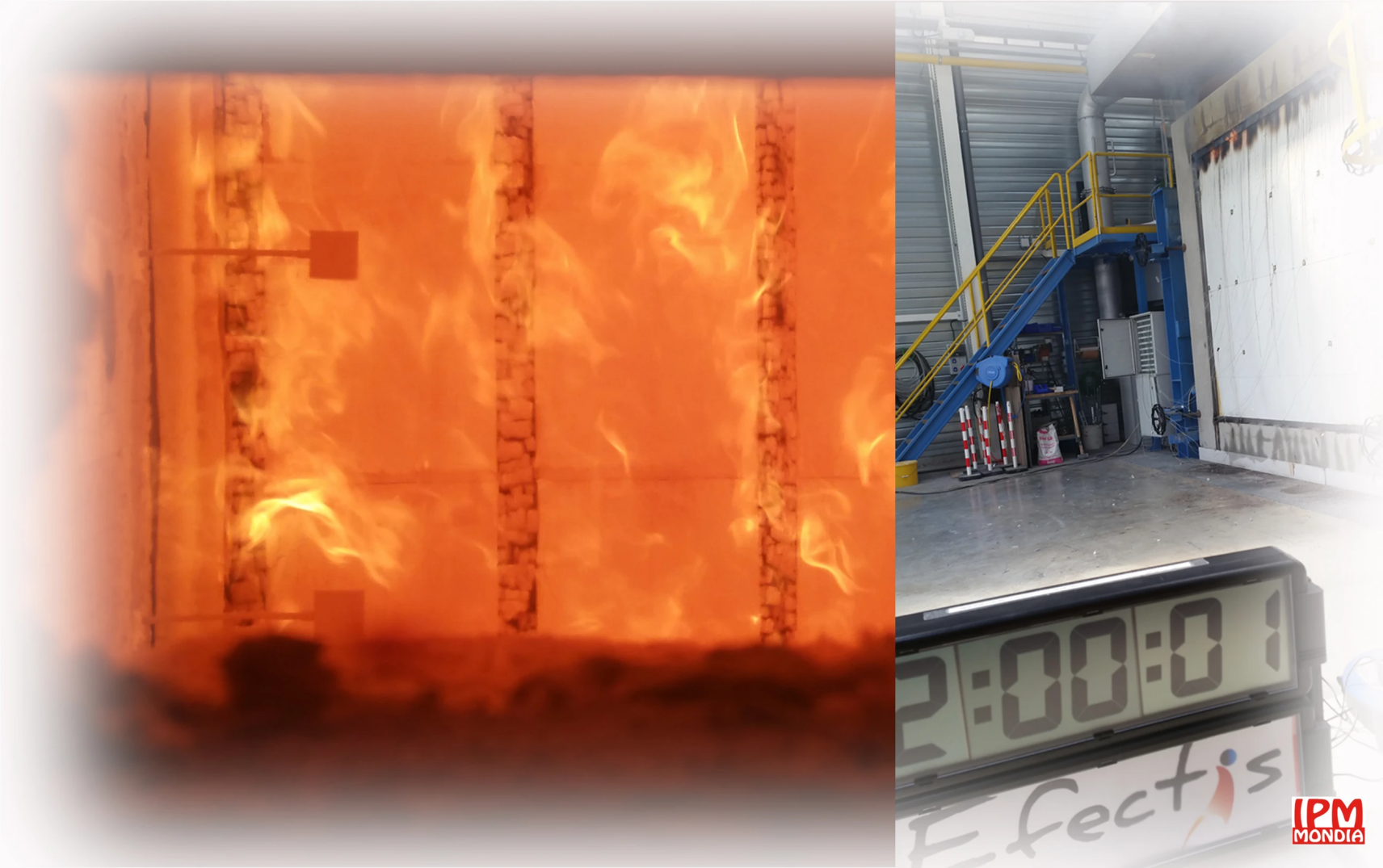
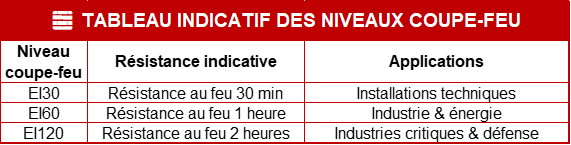
The classifications and equivalences shown are provided for information purposes only, based on the materials, configurations and standards applicable to the project.
🔥 FIRE REACTION
Fire reaction characterises the behaviour of a material when exposed to a heat source or a flame.
This classification enables the assessment of the material’s contribution to the development and spread of a fire. It is used to define the combustibility level of materials used in buildings, technical infrastructure and industrial environments.
Fire reaction performance can be expressed according to:
🔥 French M classification
🇪🇺 Euroclasses NF EN13501-1

The classifications and correspondences shown are provided for information purposes only, depending on the materials, configurations and standards applicable to the project.
⚠️ ATEX / SEVESO ENVIRONMENTS
ATEX zones are environments in which an explosive atmosphere may form in the presence of flammable gases, vapours or dust.
These environments require the use of suitable equipment, installations and technical structures to limit the risk of ignition and explosion.
The ATEX regulations require, in particular:
⚠️ the classification of zones according to risk level
⚙️ the use of suitable equipment
🔥 the limitation of potential ignition sources
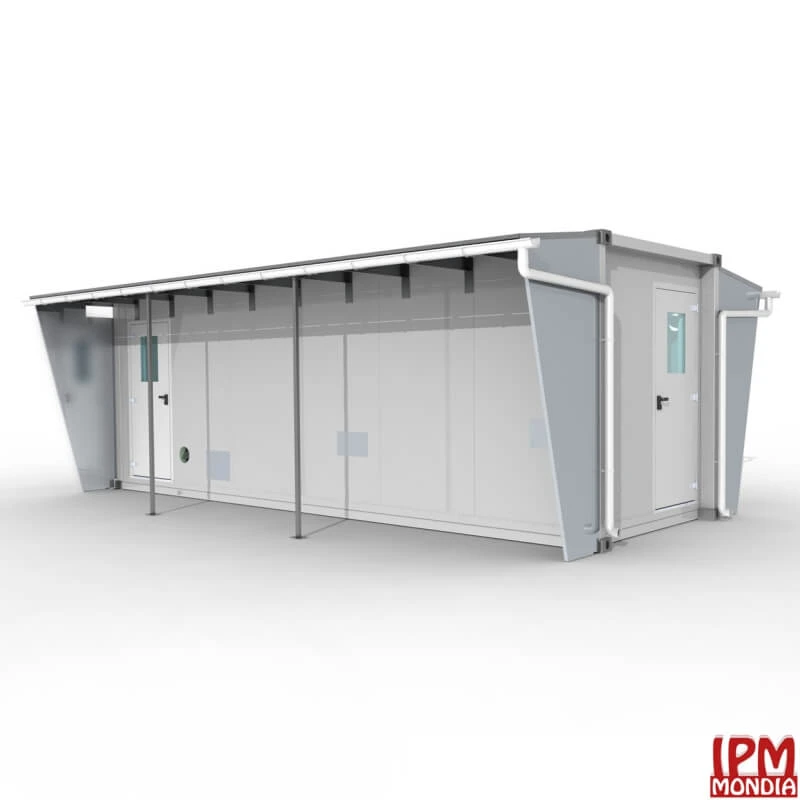
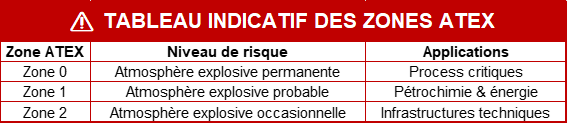
The classifications and correspondences shown are provided for information purposes only, based on the materials, configurations and standards applicable to the project.
🌦️ NV65 CLIMATIC LOADS
The NV65 regulations define the climatic loads applicable to structures and buildings subject to the effects of wind, snow and external environmental conditions.
These constraints enable the design of exposed technical structures, shelters and infrastructure to ensure their mechanical stability and performance in severe climatic environments.
Load levels are determined based on:
📍 geographical location
⛰️ altitude
🌬️ wind exposure
🏭 site operating constraints
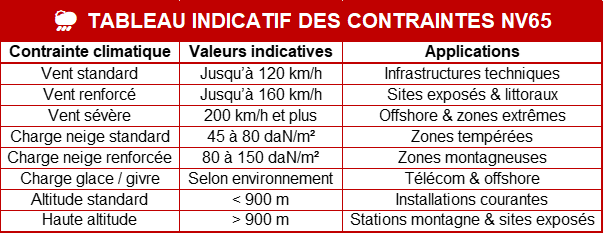
Strength levels and climatic design parameters are defined based on the project’s location, environmental constraints and applicable standards.
💥 BLAST-PROOF RESISTANCE
The NF EN13123/124-1 and NF EN13123/124-2 standards define the requirements and test methods applicable to windows, doors and closures subjected to the effects of an explosion.
The blast-resistant design of structures and technical buildings, meanwhile, is based on a specific analysis incorporating:
💥 Incident pressure
🔄 Reflection coefficient
📈 Wave momentum
⏱️ Shock wave duration
🛡️ Permissible damage level
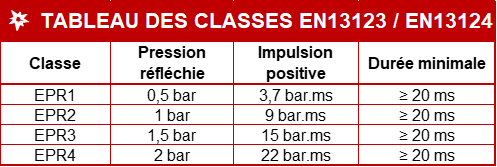
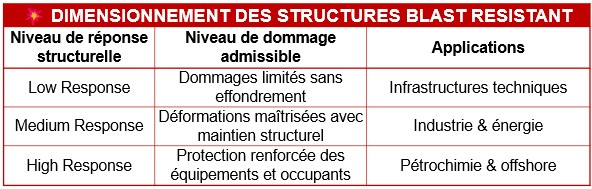
The values shown are for guidance only. The blast-resistant design of an entire building must be determined based on the intensity of the incident pressure wave, the reflection coefficient, the impulse, the signal duration and the permissible damage level. The EN 13123 / EN 13124 standards mainly concern windows, doors, closures and facades, and are not sufficient on their own to characterise the resistance of an entire structure.
📡 EMC / EMI REQUIREMENTS
Electromagnetic compatibility (EMC) encompasses all requirements aimed at limiting harmful electromagnetic emissions and protecting sensitive equipment from external electromagnetic disturbances.
In military, defence, telecommunications or control room environments, technical structures may require specific EMI / RFI attenuation devices to ensure:
To ensure:
⚙️ Continuous operation of equipment
📡 Reliability of transmissions
🛡️ Protection of sensitive systems
📶 Reduction of electromagnetic emissions and interference
EMC requirements mainly concern:
📡 Control of electromagnetic emissions
🛡️ Resistance to electromagnetic interference
📶 Electromagnetic shielding of technical structures
⚡ EMI/RFI protection of sensitive equipment
The applicable military standards are derived in particular from MIL-STD-461 standards relating to electromagnetic interference in military electronic equipment and systems.
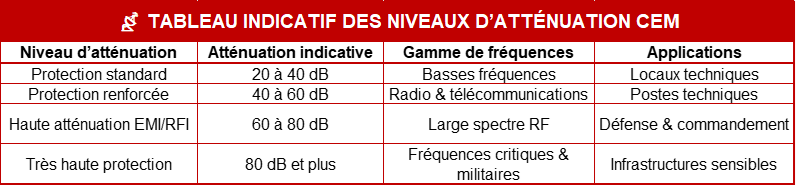
The attenuation levels indicated are provided for information purposes only, depending on the frequencies considered, the structural configurations, the integrated equipment and the standards applicable to the project.
🌍 SEISMIC LOADS - EUROCODE 8
Eurocode 8 defines the rules for the design and dimensioning of structures subject to seismic risks.
This European standard enables the assessment of the effects of an earthquake on buildings, technical infrastructure and sensitive equipment in order to ensure their mechanical stability, the protection of occupants and, in certain cases, the maintenance of critical facility functions.
Seismic design takes into account, in particular:
🌍 Regulatory seismic zoning
🪨 Geotechnical properties of the ground
🏗️ Importance class of the structure
⚖️ Dynamic response of the structure
⚙️ Constraints related to built-in equipment

Seismic requirements may therefore relate to:
🏭 Protection of sensitive infrastructure
⚙️ Strategic technical systems
🖥️ Control and monitoring stations
⚡ Continuity of energy facilities
📡 Security & telecommunications networks

Shelters and technical shelters not accessible to the public are generally not subject to specific seismic requirements, except in cases where the integrated equipment requires service continuity or where the specifications require specific post-earthquake behaviour.
🌊 OFFSHORE ENVIRONMENTS & Harsh INDUSTRIES
Offshore, maritime and harsh industrial environments impose particularly high demands in terms of corrosion, durability, fire protection and material performance.
Technical structures installed in coastal areas, on offshore platforms, in chemical industries or at petrochemical sites are exposed to:
💧 High humidity
🌊 Offshore saline environments
🧪 Corrosive chemical atmospheres
🌡️ Extreme thermal stresses
🏗️ Severe mechanical and environmental loads

The design of technical shelters and sensitive infrastructure therefore requires appropriate protection:
🛡️ Offshore anti-corrosion systems
🎨 ISO 12944 / ACQPA industrial paints
🔩 316L stainless steel & technical materials
🔥 Fire protection A60 / H60 / Jet Fire
🌊 Compatibility with harsh offshore environments


⭐ WHY CHOOSE IPM-MONDIA
For your bespoke technical projects
🏭 Integrated French manufacturing
📐 In-house design office
💻 SOLIDWORKS 3D design
🧩 Expertise in sandwich panels and technical shelters
⚙️ In-house manufacturing, machining and integration
📋 Bespoke solutions to specification
🏗️ Experience in demanding industrial environments
🛡️ Consideration of technical, regulatory and safety constraints
👉 Industrial expertise dedicated to technical projects, sensitive infrastructure and bespoke applications.
🏭 COMPREHENSIVE INDUSTRIAL EXPERTISE
From design to manufacture
IPM-MONDIA manages the entire design and manufacturing chain to ensure reliable, consistent technical solutions tailored to the specific requirements of each project.
Our integrated organisation brings together:
📐 design office
💻 SOLIDWORKS 3D design
🧩 sandwich panel manufacturing
⚙️ CNC machining
🔧 technical assembly
🔌 equipment integration
👉 A comprehensive approach to optimising quality, lead times and technical expertise in industrial projects.
🎥 DISCOVER IPM-MONDIA IN A VIDEO
Discover our industrial expertise, our production facilities and some examples of technical solutions developed for demanding environments and sensitive infrastructure.
🌍 A COMMITMENT TO CORPORATE SOCIAL RESPONSIBILITY
At the heart of our industrial development
IPM-MONDIA integrates environmental, social and societal issues into a continuous improvement approach applied across all its industrial activities.
Our CSR approach is based in particular on 7 key pillars:
👥 Customers and users
Quality, safety and satisfaction at the heart of our projects
⚖️ Human rights
Respect for people, ethics and fairness
📍Region & Local roots
Local development, French production and commitment to our ecosystem
🏛️ Governance
Structured management and continuous improvement
🌱 Environment
Reducing our environmental impact and optimising our resources
👷 Working conditions & Safety
Safety, health and continuous improvement of working conditions
🤝 Fair business practices
Transparent and responsible relationships with our partners
🚀 LET’S TALK ABOUT YOUR PROJECT
A technical solution tailored to your requirements
Do you have a specific requirement, a demanding environment or technical specifications?
Our teams will support you inthe design and implementation of bespoke technical solutions tailored to your industrial, operational and safety requirements.
🛡️ PROJECT ANALYSIS
🏗️ Turnkey solution
⚙️ Customised configuration
📞 Technical support

Company
Resources
WebTemplates by Cymadiau - Copyright (c) 2020-2026 IPM-MONDIA SAS - All rights reserved